suecrook513802eyv

Level 1 course for BA Photography Degree
express your vision
open college of the arts
Exercise 2.1
Find a a scene that has depth. From a fixed position, take a sequence of five or six shots at different focal lengths without changing your viewpoint. (You might like to use the specific focal lengths indicated on the lens barrel).
As you page through the shots on the preview screen it almost feels as though you’re moving through the scene. So the ability to change focal lengths has an obvious use; rather than physically moving towards or away from your subject, the lens can do it for you. The other immediate difference between the shots is the ‘angle of view’, which also depends on the sensor size of your camera. Use the sequence to try to get a feeling for how the angle of view corresponds to the different focal lengths fro your particular camera and lens combination. Which shot in the sequqnce feels closest to the angle of view of your normal vision.
Does zooming in from a fixed viewpoint change the appearence of things? If you enlarge and compare individual elements within the first and last shots, you can see that their ‘perspective geometry’ is exactly the same. To change the way things actually look, a change in focal length needs to be combined with a change in viewpoint.

Longest focal length, but makes the image look closer

50mm focal length, this is the nearest to normal vision and is what the eye sees.

Panoramic view, this is what the eye sees when it scans the room from left to right.
The middle image is the closest to normal human vision.
The panoramic shot is what you see, but dont automatically imagine you see.
Exercise 2.2


Both of these images were taken using the same settings, the second photo is closer because I walked into it. The first image has a longer depth of field in front and behind, the second image has a narrower depth of field.
This is why 50mm lenses are readily used for street portraiture as its what the eye sees and what the photographer wants to represent.
Exercise 2.3

Using a wide angle lens and focusing on one part of the subject, distorts other parts of the image, for example the wheel mudguards blur and look bigger, the lights almost bulge outwards. This is distortion of the lens.
Exercise 2.4

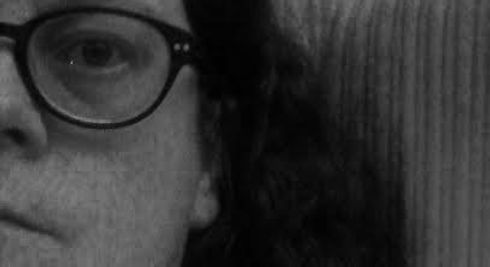
Using a longer focal length has allowed me to have a shallower depth of field which has given this portrait extra sharpness round the features especially the eyes. The eyes are the first thing you look at. The background is blurry and not distracting. I used an 80mm fixed lens for this shot.
Exercise 2.5

Using a macro lens on this flower has allowed me to zoom into it very closely so that only the edges of the flower are in focus. The flower is the first thing your eye is drawn to. The fact the main point of focus is in the middle of the frame helps as well.
Exercise 2.6


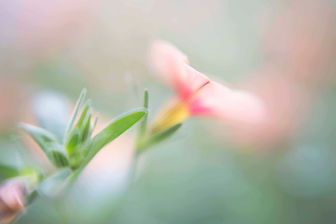
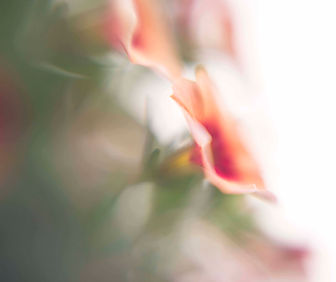
Using a shallow depth of field has enabled me to produce very slight points of focus on these flower shots so that they are almost abstract.
Exercise 2.7

A photograph of a group of flowers using a cobination of a wider lens and smaller aperture produces a whole subject in focus, even the landscape at the back of the flower basket is recogniseable as trees.